6 min read
A Camera You Might Not Notice
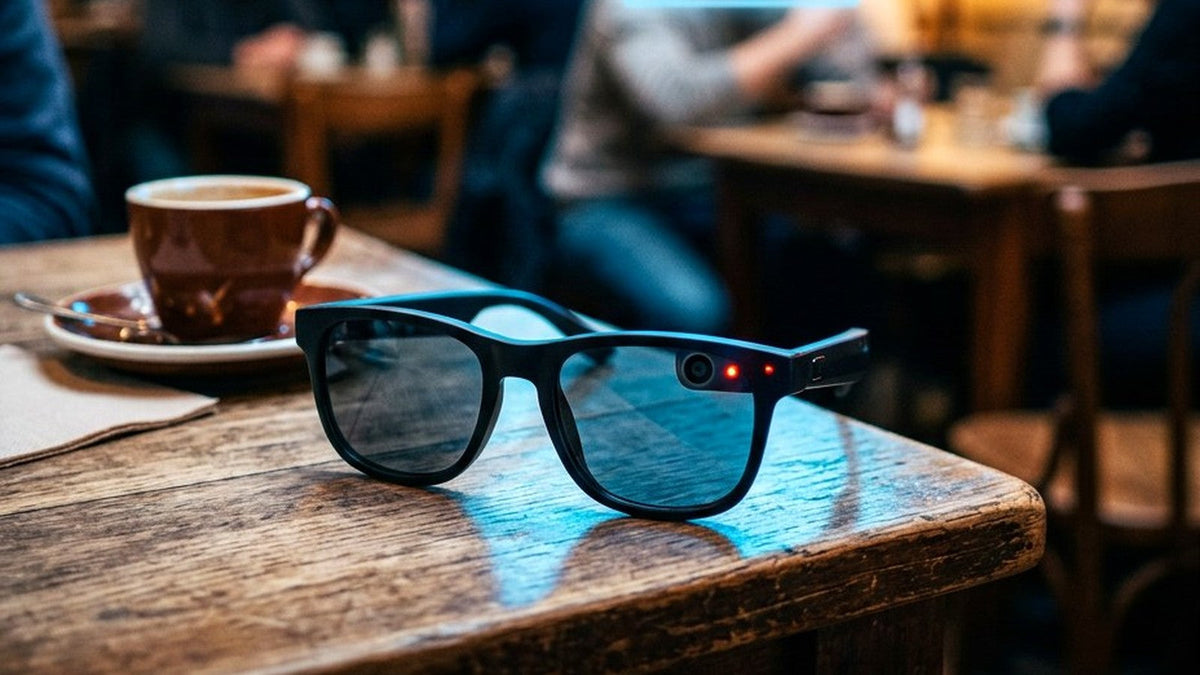
Smart glasses look almost like ordinary glasses. The difference is a tiny camera in the frame that can take photos and video, plus a built-in AI assistant. Meta sells several models, including glasses made with the Ray-Ban and Oakley brands.
Because the camera is easy to miss, Meta added a small white light on the front that turns on while the glasses are recording. That light is meant to let people nearby know they are being filmed. In 2026, two things put that protection in the news: some owners found ways to switch the light off, and reports said Meta was working on a way for the glasses to recognize faces.
What Happened
The light and the tape. According to Road to VR, since Meta's second-generation Ray-Ban glasses came out, covering the recording light with tape or something similar has caused the camera to stop working. That was meant to stop casual misuse. Meta's terms of service also forbid tampering with the glasses or hiding the features that show they are recording.
The workaround. Some owners got around the check by drilling out the light or otherwise physically disabling it, which the glasses did not detect. Straight Arrow News (SAN), citing 404 Media, reported that a method appeared in 2025 and that some people began offering to remove the light for a fee.
February 2026: face recognition. On February 13, 2026, the New York Times reported that Meta planned to add face recognition, software that identifies a person from their face, to its glasses, possibly within the year. Engadget and Thurrott summarized the report. The feature was code-named "Name Tag." Wearers could use Meta's AI assistant to identify people and pull up information about them. According to the report, it would not recognize just anyone. It might cover people the wearer is connected to on Meta's apps, and people with public accounts, such as public Instagram profiles.
The Times also described an internal memo from Meta's Reality Labs division. It said the current US political climate made this a good moment to launch, because civil society groups likely to object would be busy with other issues. Meta did not confirm the project. In a statement given to the Times, as summarized by Thurrott, Meta said it often hears interest in this kind of feature, that it was still weighing options, and that it would take a careful approach before releasing anything.
This would not be Meta's first experience with face recognition. Engadget noted that in 2021 Meta shut down Facebook's system for recognizing faces in photos after privacy complaints, then in 2024 brought back face recognition on Facebook and Instagram to spot scam ads that use celebrities' faces.
April 2026: 75 groups object. On April 13, 2026, the American Civil Liberties Union (ACLU), together with the ACLU of Massachusetts and the New York Civil Liberties Union, led 75 organizations in an open letter to Meta CEO Mark Zuckerberg. They asked Meta to stop the plan and publicly reject it. The letter warned that wearers could put names to strangers at protests, medical clinics and businesses, and that stalkers and scammers could misuse the tool. "Your glasses should not know my name," said Cody Venzke, a senior staff attorney at the ACLU, in the group's press release.
June 2026: code found, then removed. On June 4, 2026, Wired reported finding unreleased face-recognition code, labeled Name Tag, inside the Meta AI app that pairs with the glasses. Engadget reported that the code was dormant, and that Meta removed it in an app update on June 5. According to SAN, a Meta spokesperson said that nothing had shipped to customers and no final decision had been made. Meta's chief technology officer called Wired's reporting misleading, SAN reported.
July 2026: the camera shutoff. SAN reported on July 8, 2026, that Meta had announced tamper detection in a published FAQ. According to Meta, if the recording light has been tampered with or destroyed, the camera turns off. Meta said it knew of elaborate attempts to alter or destroy the light. Road to VR reported the same day that the change was part of a mandatory software update, version 26, rolling out to Meta Ray-Ban and Meta Oakley glasses and to Meta's new $300 Meta Glasses. SAN's report that day said the launch date was still unclear. Road to VR reported that Meta does not appear to be disabling glasses with a removed light entirely; they lose the camera.
As of the reports we found, Meta has not launched face recognition on its glasses.
How This Kind of Thing Happens
A recording light is only a signal. It works as long as the device can tell whether the light is really there and working. When the check only looked for a blocked light, removing the light entirely slipped past it. Meta says its update closes that gap by detecting when the light itself has been tampered with or destroyed.
Face recognition works by turning the features of a face into a set of numbers, a kind of digital fingerprint for the face. The software then compares those numbers against a collection of faces it already knows. If it finds a close match, it can show a name. The more photos linked to names a company holds, the more people it could potentially identify. A company that runs large social networks already holds a very large collection of named photos.
Put a camera on someone's face and connect it to that kind of matching, and a stranger on the street could, in principle, go from a glance to a name.
Why It Matters at Home
Most privacy advice is about your own devices: your phone, your computer, your settings. Camera glasses change that. The person recording is someone else, and you may not even know a camera is pointed at you.
That affects ordinary moments: a child at the playground, a neighbor at a backyard party, a relative at a doctor's office waiting room. The ACLU letter raised concerns about people being identified at clinics and protests. Road to VR reported that courthouses in New York state and Philadelphia have banned smart glasses, a sign that some institutions already have concerns.
Meta says its update addresses one loophole. Face recognition is a separate and larger question, and for now it remains unanswered.

What You Can Do
- Learn what the glasses look like. Know that a small light on the front frame means recording. Some owners have disabled the light, and it is not clear that every pair has received Meta's fix yet, so a dark light is not proof that nothing is being recorded.
- Set house rules. It is reasonable to ask guests not to record in your home, and to ask before recording at family gatherings. Say it plainly and early.
- Review your public profiles. The reported plan would reach people with public accounts. Check your social media privacy settings, and your children's, and decide which photos of faces really need to be public.
- If you own camera glasses, leave the light alone. Meta's terms forbid tampering, and Meta says its July update turns off the camera if the light is disabled. Ask people before you record them.
- Keep the software updated. Install updates for the glasses and their app so privacy protections like the tamper check are in place.
- Speak up if you want to. The ACLU has asked people to write to Meta with their concerns about face recognition on glasses.
The question to ask
Who is recording, and who decides what happens to it?
How HOLLIS H-Ai handles it
HOLLIS H-Ai runs on your own computer, built for your household's daily tasks. Your information stays in your household.
Sources
- Road to VR, Jul 8, 2026
- Straight Arrow News, Jul 8, 2026
- Thurrott, Feb 13, 2026
- Engadget, Feb 13, 2026
- ACLU, Apr 13, 2026
- Engadget, Jun 8, 2026
- Straight Arrow News, Jun 5, 2026
This article is based on the published reports listed above, written in our own words. Details are as reported on the dates shown. Spotted an error? Email support@krudodesigns.net and we will correct it.